
“You Can Design and 3D Print Almost Anything. But You Can’t Mold Everything.”
A 3D printer can make some pretty amazing things.
Give a designer the right software and a 3D printer, and almost any shape can become a physical part. That makes 3D printing an incredibly useful tool for product development, prototyping, and testing.
But there is an important distinction between something that can be 3D printed and something that can be efficiently manufactured using plastic injection molding.
You can design it.
You can 3D print it.
That doesn’t necessarily mean you can injection mold it.
This is where Design for Manufacturability, or DFM, becomes critical.
For companies developing custom plastic injection molded parts, considering manufacturability early in the design process can help prevent costly tooling changes, production problems, and redesigns later.
What Is Design for Manufacturability?
Design for Manufacturability is the process of designing a part with its eventual manufacturing process in mind.
For plastic injection molding, that means looking beyond whether a part performs its intended function.
The design also needs to work with:
- The injection molding process
- The selected thermoplastic material
- Mold construction
- Material flow
- Cooling
- Part ejection
- Required tolerances
- Production volume
- Secondary operations
A design that looks great on a screen may not be a good injection molding design.
That doesn’t mean the product can’t be manufactured.
It may simply mean the design needs to be modified before the mold is built.
Why 3D Printing and Injection Molding Are Different
One of the biggest misconceptions in product development is assuming that because a prototype can be 3D printed, it can automatically be injection molded.
The two manufacturing processes have very different requirements.
3D printing generally builds a component layer by layer. The process allows designers to create highly complex geometries without having to consider how a mold will open or how the finished part will be removed from that mold.
Injection molding is different.
Molten plastic is injected into a mold cavity under pressure. Once the material cools and solidifies, the finished part has to be removed from the mold.
That simple difference creates significant design considerations.
A geometry that works perfectly for 3D printing may create a major tooling problem in injection molding.
The Mold Has to Open
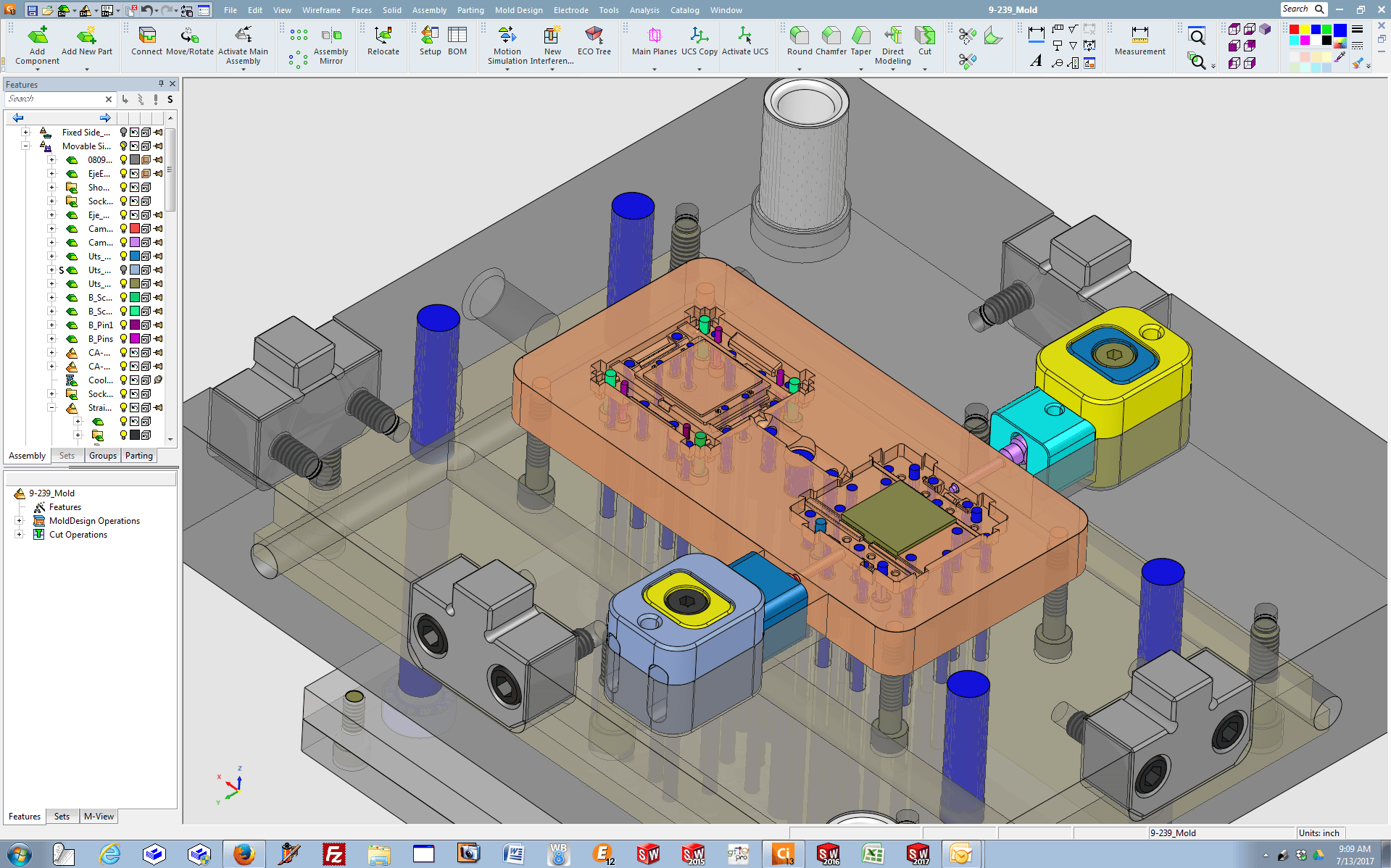
One of the first questions an injection molding engineer needs to ask is:
How is the part going to come out of the mold?
An injection mold generally consists of two or more sections that separate along a predetermined parting line.
If the part has features that prevent it from being released from the mold, additional tooling features such as slides, lifters, or other mechanisms may be required.
In some cases, the geometry may need to be redesigned.
This is one of the fundamental differences between designing for additive manufacturing and designing for injection molding.
With 3D printing, the printer can create shapes that would be extremely difficult or impossible to remove from a conventional injection mold.
With injection molding, the part and the mold have to be designed to work together.
Draft Angles Matter
Another important DFM consideration is draft.
Draft is a slight taper incorporated into vertical surfaces of a molded part to help the finished component release from the mold.
Without adequate draft, a part can drag against the mold surface during ejection.
That can lead to:
- Scratches
- Drag marks
- Part deformation
- Difficult ejection
- Damage to the mold or component
The amount of draft required can vary depending on the material, surface finish, depth of the feature, and other design considerations.
This is why draft should be considered during the design stage rather than after the mold has already been built.
Wall Thickness Can Affect the Finished Part
Wall thickness is another important consideration in plastic injection molding.
Designers may be tempted to make walls thicker because thicker can seem stronger.
But in injection molding, unnecessarily thick sections can create problems such as sink marks, longer cooling times, and inconsistent shrinkage.
On the other hand, walls that are too thin can make it difficult for the material to flow properly through the mold.
The goal is not simply to make every wall the same thickness.
The goal is to develop a wall structure that works with the material, geometry, tooling, and performance requirements of the part.
Material Flow Has to Be Considered
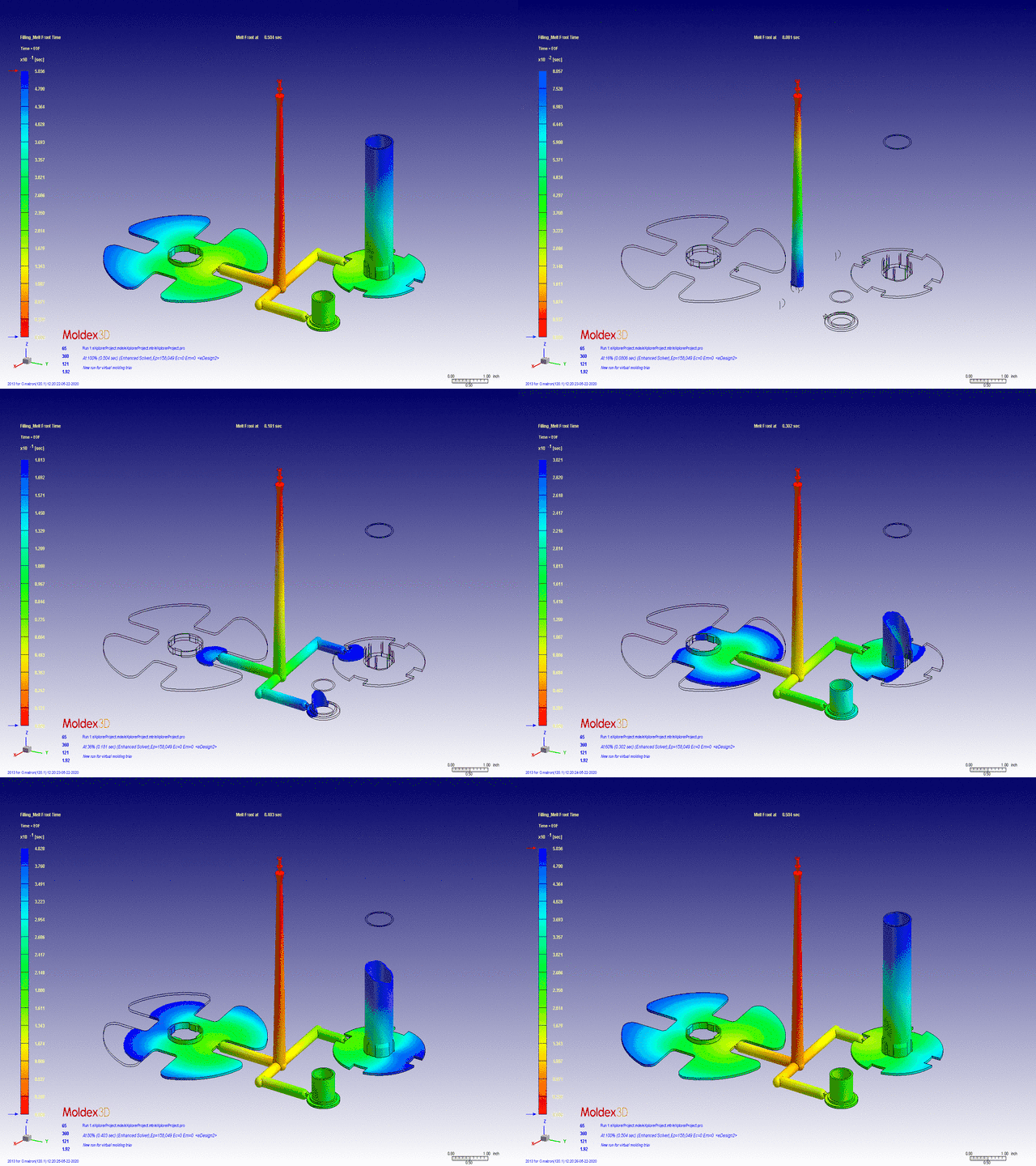
When molten thermoplastic enters a mold, it has to travel through the cavity and fill the intended geometry.
The location of the gate, the thickness of the part, the flow path, the material, and the mold design can all influence how the plastic fills the cavity.
Poorly considered geometry can contribute to problems such as incomplete filling, weld lines, trapped air, warping, or other quality issues.
This is another reason why DFM should happen early.
Changing the geometry of a CAD model is generally much easier than changing a completed injection mold.
Complex Features May Require More Complex Tooling
Designers often want to incorporate features such as:
- Undercuts
- Threads
- Deep ribs
- Snap fits
- Side holes
- Living hinges
- Text or logos
- Tight tolerances
- Complex internal geometries
Many of these features can be molded successfully.
The question is not always whether a feature is possible.
The question is how it will be molded and what that means for the tooling, cycle time, cost, maintenance, and production process.
A feature that requires a complex mold mechanism may be completely appropriate for the application.
In another situation, a small design modification could eliminate the need for that complexity.
That’s where an experienced injection molding partner can provide valuable input.
DFM Can Help Control Tooling Costs
Injection molding requires an upfront investment in tooling.
The complexity of the mold can have a significant effect on that investment.
A design that requires multiple slides, lifters, inserts, complex cores, or other mechanisms may require more time and resources to manufacture and maintain than a simpler design.
Sometimes the best solution is not to eliminate a feature.
Sometimes it’s simply to ask whether the feature can be accomplished another way.
For example, a small change to the geometry may simplify the mold while still producing the required function.
That conversation is much easier to have before the mold is built.
This Is Why DFM Should Happen Early
One of the biggest advantages of working with an experienced injection molding company early in the development process is the ability to identify potential manufacturing issues before they become expensive problems.
At Abtec, engineers can review a part during the development process and evaluate considerations such as material selection, mold design, part geometry, tooling requirements, and manufacturability.
The goal isn’t to change a designer’s vision simply for the sake of manufacturing.
The goal is to find the best way to turn that vision into a repeatable, cost-effective molded component.
Sometimes that means making no changes at all.
Sometimes it means making a small adjustment.
And sometimes it means going back to the drawing board.
Finding that out before production tooling is built can save significant time and expense.
Prototype First, Then Mold
3D printing can play an important role in this process.
A 3D-printed prototype can help a product development team evaluate the physical size, fit, function, appearance, and overall concept of a part before committing to injection molding.
But a successful prototype is not the end of the design process.
It is often the beginning of the manufacturing conversation.
Once the prototype has been evaluated, the design can be reviewed specifically for injection molding.
That transition from prototype to production is where DFM becomes especially valuable.
The Bottom Line
You can design and 3D print almost anything. But you can’t mold everything the same way.
Injection molding has its own design rules and manufacturing considerations.
Draft, wall thickness, material flow, parting lines, undercuts, ejection, tooling complexity, tolerances, and material selection all need to be considered when developing a part for custom plastic injection molding.
The earlier those considerations are addressed, the more opportunities there are to optimize the design before production tooling is built.
At Abtec, we believe the best injection molded parts start with good communication between the product designer and the manufacturer.
Because the goal isn’t simply to make the part.
It’s to design a part that can be molded efficiently, consistently, and cost-effectively.
Designing a Part for Injection Molding?
Whether you’re starting with a new product concept, an existing CAD file, a 3D-printed prototype, or a part that needs to be redesigned for production, Abtec can help evaluate your project.
Our team provides custom thermoplastic injection molding, injection mold design, tooling, prototyping, engineering support, and production services from our facility in Bristol, Pennsylvania.
Have a part you’d like to mold? Contact Abtec to discuss your design and manufacturing requirements.